Patrimonio Italiano, the Association That Wants to Give a Voice to the New Italian Diaspora




Within the landscape of Italian associations abroad, a new organization is taking shape that interprets national heritage in a broader way than the traditional meaning of the term. Not only monuments, works of art, landscapes, or assets to be preserved, but also people, family memories, rights, language, traditions, and a sense of belonging.
This is the idea around which Patrimonio Italiano – L’Orgoglio delle Radici has developed. The association, legally based in Terni, presents itself as a Third Sector social promotion organization committed to strengthening ties between Italy and Italian and Italian-descendant communities around the world.
The association is relatively young, but it has quickly entered one of the most sensitive and controversial issues in the current national debate: the relationship between the Italian Republic, citizens living abroad, and the millions of descendants of Italian emigrants.
Its project brings together at least three dimensions: the cultural enhancement of Italian identity, information on rights and obligations connected to citizenship, and public representation activity aimed mainly at the diaspora.
An association born around the concept of “human heritage”
The official website defines Patrimonio Italiano as a social promotion association with civic, solidarity-based, and socially useful purposes. Its declared legal headquarters are in Terni, Umbria. The organization states that it is non-partisan; however, in the Portuguese version of its presentation, the wording “apartidária e confessional” appears, probably due to an editorial inaccuracy, since the overall context seems to indicate an association not linked to political parties or religious orientations.
Its stated mission is to promote and enhance Italian cultural, artistic, and identity heritage, while also strengthening social cohesion and the sense of belonging among Italians around the world. The association identifies cultural events, editorial projects, training, volunteering, civic participation, and information on the rights and duties connected to citizenship as its main tools.
This approach reveals a precise cultural choice. Patrimonio Italiano is not primarily concerned with the material protection of historical assets, as established organizations such as FAI or Italia Nostra are. Its main focus is the identity heritage of the diaspora: the set of ties, memories, documents, traditions, and rights through which a person living abroad continues to recognize themselves as Italian or of Italian origin.
The center of the project, therefore, is not only geographic Italy. It is Italy as a widespread community.
The diaspora as part of the nation
The association’s proposal captures a deep transformation in the concept of citizenship. For millions of people born outside Italian borders, national belonging does not necessarily coincide with residence. It can be expressed through a surname, family language, gastronomy, popular religiosity, regional associations, genealogical research, recognition of citizenship, or the desire to reestablish a concrete relationship with the land of origin.
Patrimonio Italiano argues that national culture is a common good capable of crossing generations and continents. In its presentation, the association imagines a global Italian community united by memory, legality, culture, and participation. National heritage is described as a bridge between people, territories, and cultures.
This vision finds particularly fertile ground in Latin America and especially in Brazil, where the presence of Italian descendants has historically been very significant. Much of the association’s communication is, in fact, published in Portuguese, alongside Italian, Spanish, and English.
The use of several languages is not a secondary detail. It signals the intention to build a transnational organization and to speak also to people who maintain an Italian identity even if they do not fully know the language of their ancestors.
In May 2026, the association announced the launch of a portal in four languages, presenting it as a space dedicated to culture, genealogy, citizenship, and information for Italian communities around the world. The website frequently publishes content on civil registry documentation, the electronic identity card, genealogy, access to Italian services, culture, traditional celebrations, and institutional news.
Fabiola Leardini and the leadership of the association
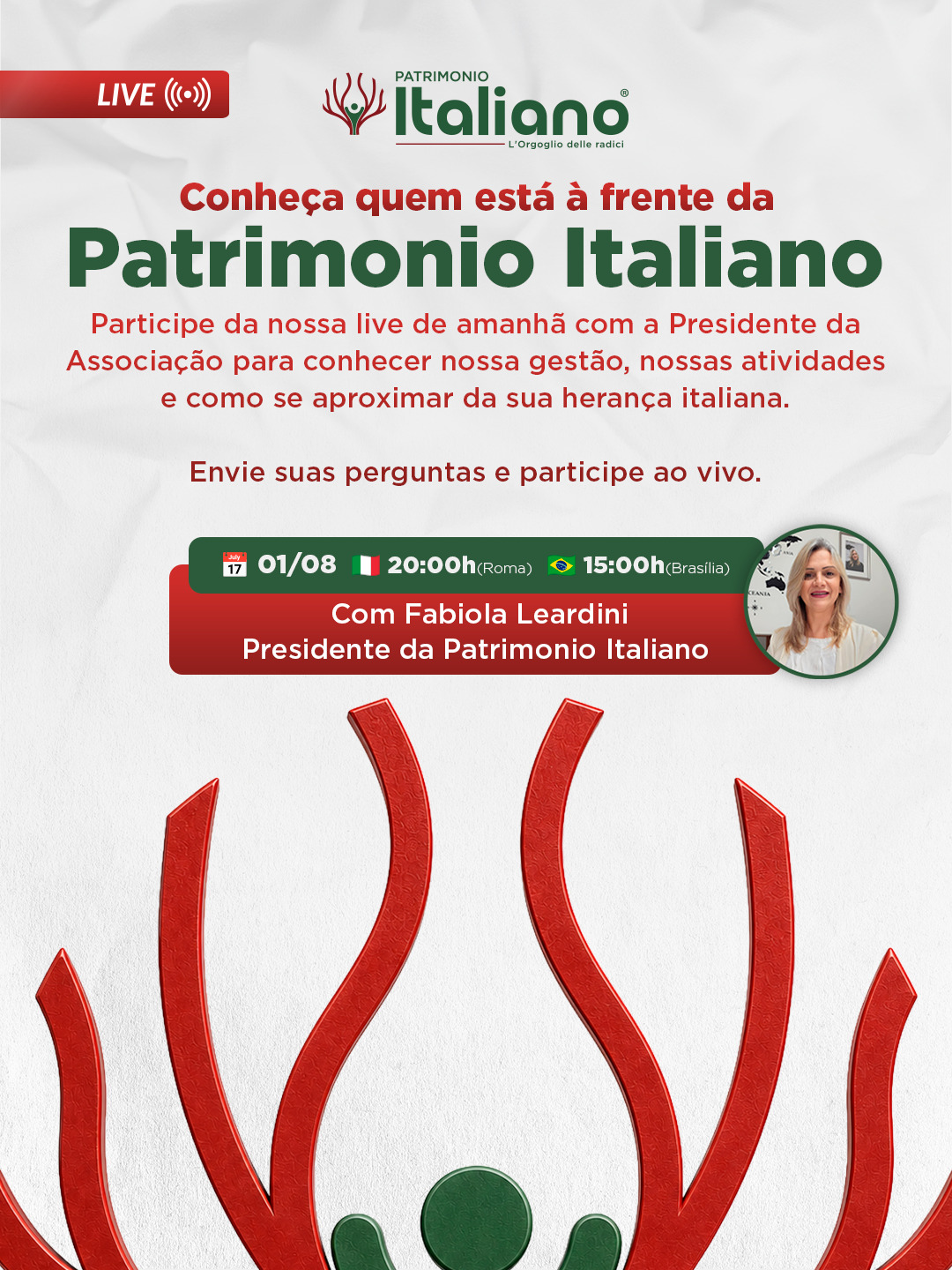
The president is Fabiola Gomes Carvalho, professionally known as Fabiola Leardini.
According to the profile published by the association, Leardini has worked for years in the field of assistance to citizens of Italian origin living abroad, with particular attention to citizenship recognition procedures, documentation, and administrative processes. She is also the founder of the company Leardini Consulenze.
Her professional background partly explains the organization’s character. Patrimonio Italiano was born at the intersection of association work, identity culture, and citizenship-related information services.
It is precisely this overlap that represents both a strength and an element to be observed carefully. On one hand, direct knowledge of the bureaucratic difficulties faced by citizens abroad allows the association to identify real needs. On the other hand, the proximity between the association’s activity and the president’s professional experience requires very transparent communication, capable of clearly distinguishing institutional information, nonprofit action, and any commercial activities connected to external entities.
The website also presents a leadership structure composed of several figures: Fabiano Fiore is listed as board member and vice president; Noemi Dias as board member and treasurer; Danielle Furlanetto as board member responsible for the legal area; Janaina Traversim as vice president; and Anita Izidoro as board member and treasurer.
The presence of legal, administrative, and organizational professionals appears consistent with the declared intention to offer reliable content on the rights of Italians around the world.
From culture to rights representation
Patrimonio Italiano does not limit itself to promoting language, gastronomy, and traditions. A growing part of its activity concerns Italian citizenship by descent, commonly referred to as iure sanguinis.
This is a politically and legally delicate field. In recent years, the Italian legislature has introduced restrictive measures and new conditions for recognizing citizenship for descendants born abroad. These changes have generated concern among Italian-descendant communities, sector professionals, and numerous associations.
In January 2026, Patrimonio Italiano promoted an international petition addressed to the Government and Parliament. The appeal asked for the reconsideration of recent measures and the opening of a more inclusive dialogue with Italian communities abroad. The petition, published in Italian, Portuguese, Spanish, and English, presented citizenship not only as a legal institution, but as the recognition of a historical, cultural, and human bond.
The initiative represents one of the most significant moments in the association’s short history. With it, Patrimonio Italiano moved beyond cultural promotion and entered directly into the space of civic mobilization.
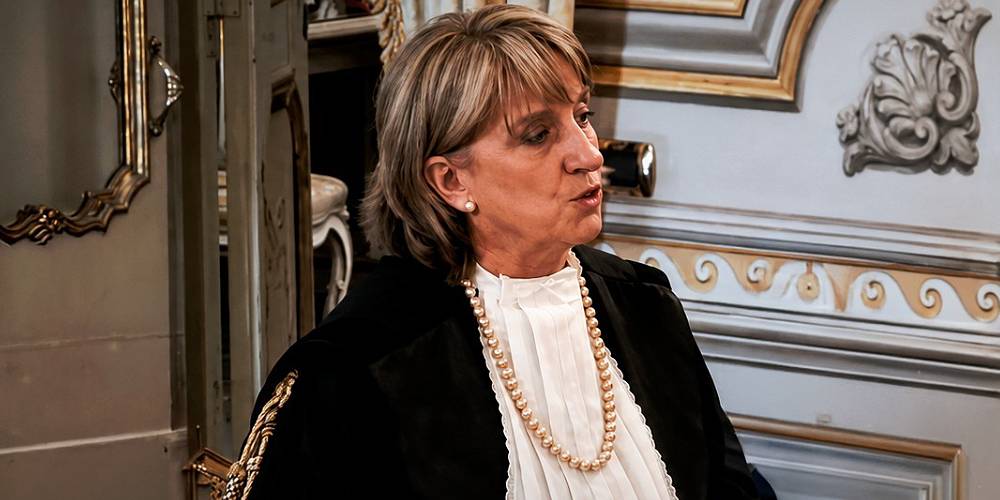
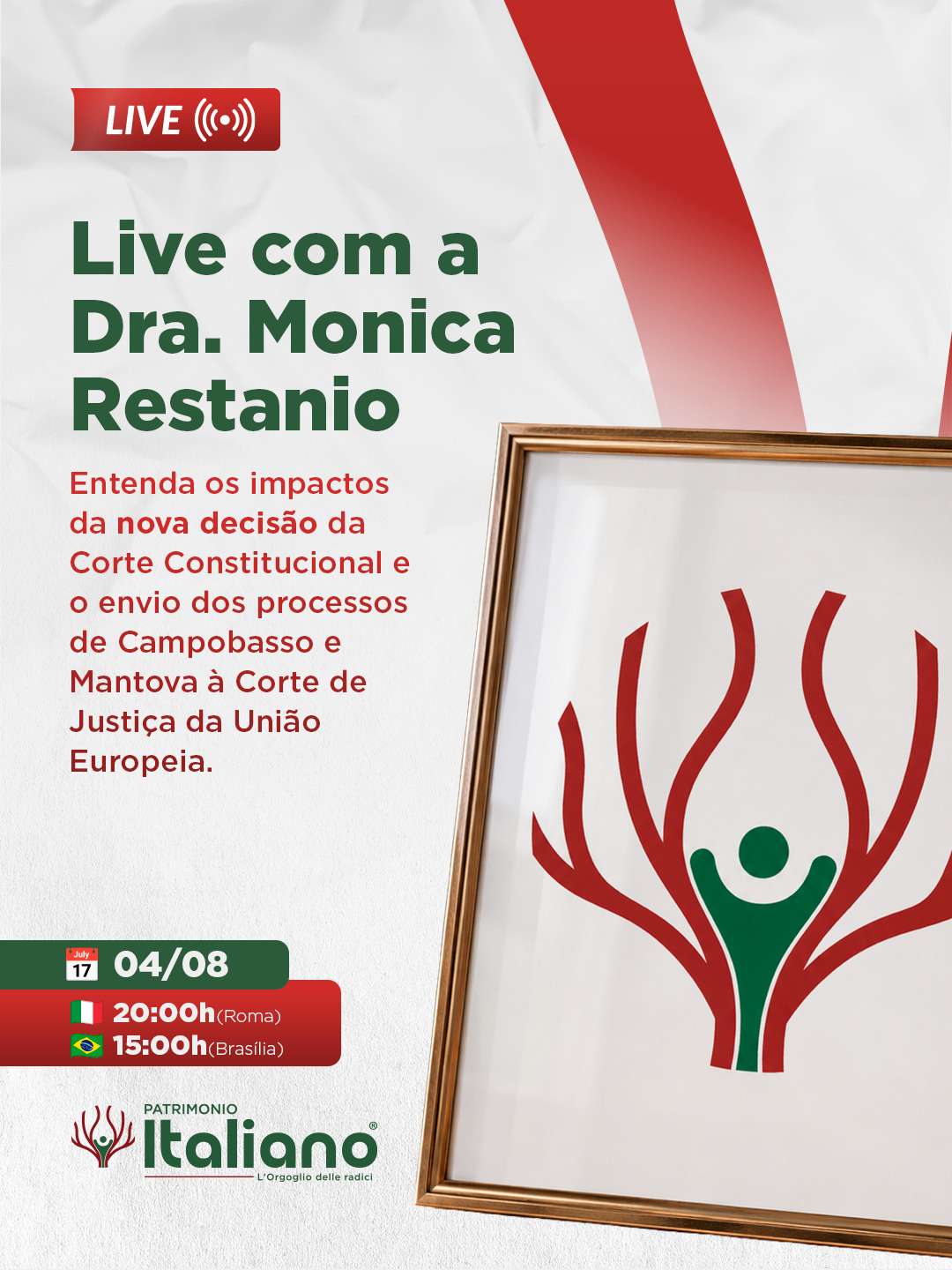
The organization has also followed the judicial debate on the new rules. In June 2026, it communicated the president’s presence at a hearing before the Constitutional Court in Rome dedicated to the effects of the changes on citizenship by descent.
Participation in a public hearing does not, of course, amount to a procedural or institutional role. However, it is indicative of the association’s strategy: to be physically present in the places where issues affecting the diaspora are discussed and to transform those events into informational content for the public.
Editorial and informational activity
One of the most visible aspects of Patrimonio Italiano’s activity is the construction of its own editorial ecosystem.
The portal publishes articles on citizenship, documentation, genealogy, culture, the history of emigration, and Italian services. Among the topics covered in 2026 are the legal and civic meaning of citizenship, the usefulness of Italian and Brazilian certificates in family reconstruction, the electronic identity card, access to the National Health Service, and the creation of a family tree.
The goal is clearly to address concrete questions: how to reconstruct one’s ancestry, which documents to look for, which rights belong to Italian citizens living abroad, and how to navigate bureaucracy.
This type of communication responds to a real need. Citizenship regulations, AIRE registration, consular competences, and municipal procedures are complex and constantly evolving matters.
The journalistic quality of such content, however, depends on the ability to systematically cite laws, circulars, court decisions, and institutional sources. Some articles on the portal have an effective explanatory style, but they are generically signed by “Patrimonio Italiano” and include an indication that they were produced by a digital marketing company.
To consolidate its authority, the association will therefore need to develop a clearer separation between promotional communication and technical-legal information, indicating authors, qualifications, primary sources, and dates of updates.
In sensitive matters such as citizenship, health, taxation, or documentation, accuracy is not an accessory element: it is part of the social service itself.
Volunteering, membership, and professional network
Patrimonio Italiano states that its activities are mainly based on the volunteering of its members. Among the values mentioned are gratuity, civic participation, legality, competence, and international cooperation.
Membership is open both to individuals and to companies, entities, and organizations. The association presents membership as a tool to participate in an international network, support cultural activities, and contribute to the representation of Italians and descendants abroad.
The model seems aimed at creating a community made up of volunteers, professionals, consultants, lawyers, and cultural operators. The future value of this network will depend on its ability to translate membership into measurable projects: courses, free assistance, events, publications, territorial initiatives, collaborations with municipalities, Italian cultural institutes, universities, and diaspora associations.
At present, the available communication mainly describes a phase of construction and positioning. The website presents broad purposes and intense content production, but it does not yet publish easily accessible overall data on the number of members, social balance sheet, funding received, volunteer hours, or the impact of individual projects.
This is not an unusual gap for a young organization. However, it is the step that will distinguish a digital community from a stable and recognized Third Sector entity.
Social media presence: identity, mobilization, and emotional storytelling
The association’s social media strategy appears strongly centered on the concepts of roots, belonging, family memory, and identity pride.
Instagram and Facebook are used to share updates on citizenship, report participation in hearings and public initiatives, promote membership, and emotionally engage Italian-descendant communities. The identified publications show communication mainly in Portuguese and Italian, with direct and mobilizing language.
One of the most evident traits is the personalization of communication around the president. Many of the association’s activities are narrated through speeches, live broadcasts, and photographs of Fabiola Leardini.
This choice facilitates recognition of the project and creates an immediate relationship with the public, but at the same time concentrates the organization’s reputational capital on a single figure. To grow as an institution, Patrimonio Italiano will progressively need to give greater visibility also to members, local representatives, experts, and the people benefiting from its initiatives.
On social media, what emerges above all are expressions of support, sharing of citizenship-related campaigns, and invitations to join the association’s “great family.”
During this research, no independent and structured collections of reviews or verified testimonials about members’ experiences were found. It would therefore not be correct to speak of a documented level of satisfaction or to attribute unverifiable individual results to the organization.
The experiences visible online come mainly from the channels of the president, the association, or interlocutors close to the Italian-Brazilian world. They are useful sources for understanding the language and objectives of the project, but they do not amount to an independent external assessment.
The construction of a symbolic identity
In December 2025, Patrimonio Italiano also created its own anthem, written by the president and musically developed with the support of artificial intelligence tools.
According to the presentation published by the magazine Insieme, the song was conceived as a collective chant for Italian communities around the world and as a symbol of continuity between tradition, memory, and contemporary technologies.
The initiative may seem marginal, but it has a precise meaning within identity-based association work. Anthems, logos, colors, and common rituals help build an imagined community, especially when its members live in different countries and do not share a physical space.
The choice confirms that Patrimonio Italiano does not want to present itself merely as an information desk. It aspires to build a recognizable collective identity.
Relations with the press and public visibility
The association’s website mentions articles or contributions attributed to media outlets such as O Globo, Terra, Valor Econômico, and the Italian-Brazilian magazine Insieme.
Among the external sources that can be consulted, Insieme has followed several of the organization’s initiatives, including the anthem and the citizenship petition. The magazine represents an important observatory on Italian communities in Brazil and offers the association significant visibility.
However, it is necessary to distinguish between genuine independent journalistic coverage, interviews, press releases republished by media outlets, and promotional articles. This distinction is essential when assessing the public reputation of a young organization.
Media visibility exists and is growing, but it does not yet appear to be accompanied by a broad plurality of independent analyses.
A promising organization called to the test of transparency
Patrimonio Italiano responds to a cultural and political demand that Italian institutions have often addressed discontinuously: how to maintain a stable relationship with citizens and descendants living outside the national territory.
The association understands that contemporary Italian identity is no longer solely national. It is a global network made up of communities, families, entrepreneurs, students, professionals, and citizens seeking information, recognition, and participation.
The project presents several interesting elements:
- a clear and socially relevant mission;
- a strong capacity for digital communication;
- a direct presence in the Italian-Brazilian world;
- concrete attention to documentation and citizenship issues;
- a structure involving professionals from different sectors;
- the ambition to represent an international community.
Alongside these strengths, there are aspects that deserve to be developed with rigor.
To consolidate its credibility, Patrimonio Italiano should make more accessible its statute, registration details in the competent registers, full governing bodies, financial statements, sources of funding, criteria for the use of donations, and results achieved.
It would also be useful to publish annual reports with verifiable indicators: number of members, countries represented, events organized, people reached, free informational consultations, institutional collaborations, cultural projects, and social impact.
A clearer distinction between the association, the professional activities of its leaders, and the companies responsible for communication would also help avoid misunderstandings and strengthen public trust.
The real test: turning belonging into participation
Patrimonio Italiano was born from a correct intuition: a nation does not coincide exclusively with its borders.
Italian history is also the history of millions of departures, of families who rebuilt their lives elsewhere, and of communities that continued to speak, cook, celebrate, and imagine Italy thousands of kilometers away.
The association is trying to transform this emotional legacy into an organized community.
The challenge will be to prevent Italian identity from remaining merely an evocative word or a tool for occasional mobilization. To become an authoritative entity, Patrimonio Italiano will need to produce reliable knowledge, accessible services, concrete cultural initiatives, and transparent forms of representation.
Its future will depend on its ability to hold together two needs: pride in roots and institutional rigor.
Because the heritage of a country does not live only in the places it preserves. It also lives in the quality of the relationship it manages to maintain with the people who continue to recognize themselves in its history.
Source: JTV Magazine News
Did you like this content? Follow our portal or our Instagram profile and stay up to date!